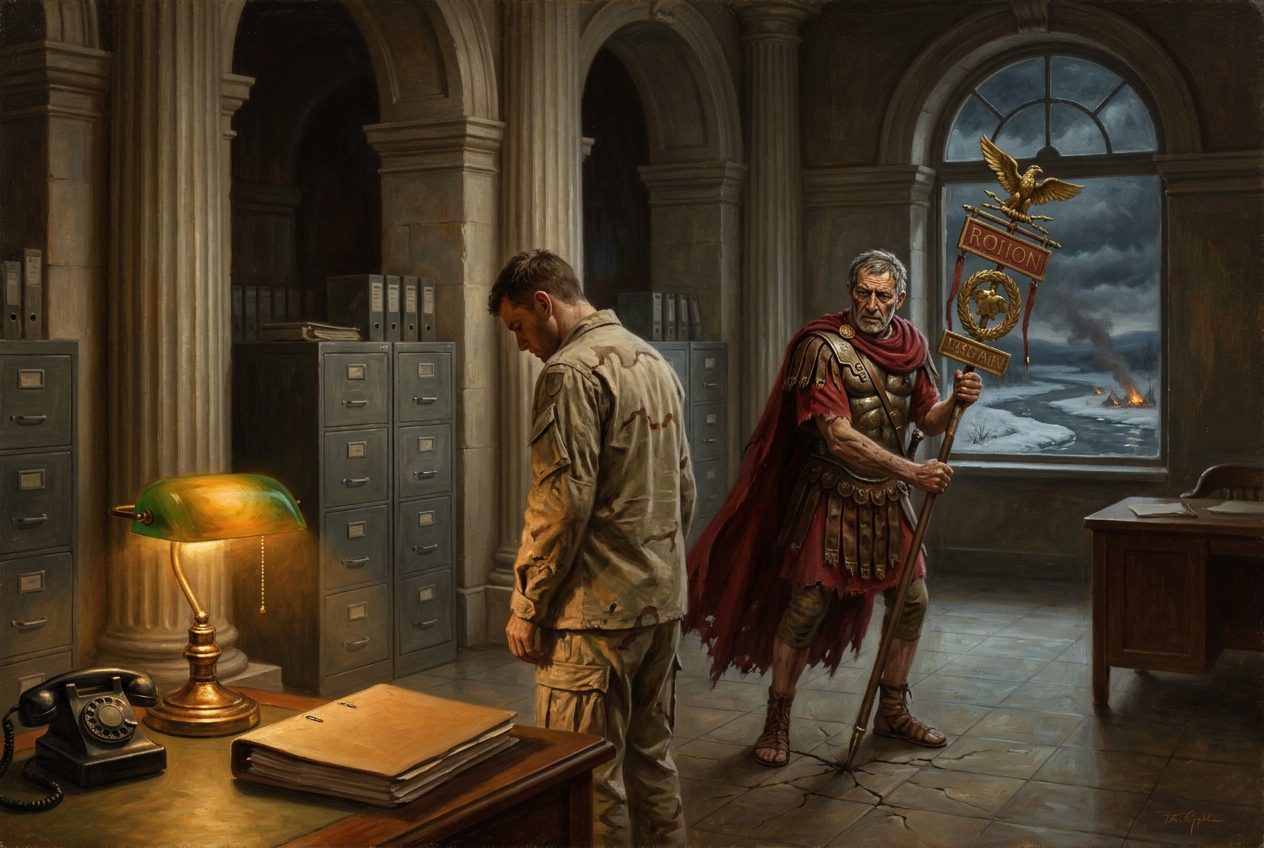
Tab. IStatio Non Deserenda, sive Miles et Scriba. Tabula Actis Mundi more veterum picta (a machina).The Post Not to Be Deserted, or The Soldier and the Clerk. Painted for Acta Mundi in the classical manner (AI-generated).
Ad Se Ipsum · De milite cui mors pro auxilio oblata estTo Himself · On the soldier who was offered death in place of help
De statione non deserenda
Do not desert the post
Acta Britannica quae Daily Mail appellantur narrant veteranos Canadenses, vulneribus aut memoria proeliorum aegros, a ministris officii publici rebus veteranorum curandis praepositi ad mortem medicorum ope accipiendam invitatos esse. Receptui canit imperator, numquam scriba qui impensas computat.
The British paper called the Daily Mail reports that Canadian veterans, sick from wounds or from the memory of battle, were invited by officials of the public office charged with veterans' affairs to accept death at the hands of doctors. The commander sounds the retreat, never the clerk who counts the costs.
Cur hoc legimusWhy we read this Quia princeps meminisse debet eos qui pro salute publica vulnera tulerunt non tamquam sarcinas abiciendos esse.Because a ruler must remember that those who bore wounds for the common safety are not to be discarded like useless baggage.
Die Solis, ante diem VI Idus Novembres. In castris ad Danuvium.
Sunday, 8 November. In camp on the Danube.
I. Acta quae Daily Mail appellantur nuntiant militem Canadensem, David Baltzer nomine, qui bis in Afghania stipendia fecerat et ob memoriam proeliorum animo aegrotabat, litteris certiorem factum esse beneficia sua deminuta esse. Cum officium publicum rebus veteranorum curandis praepositum per telephonum adisset, ministrum, ut ipse dicit, inspectis tabulis animadvertisse curationes parum profuisse, deinde rogasse num umquam de morte medicorum ope accipienda cogitavisset. Id anno MMXIX, biduo ante Natalem Christi, factum esse narrat.
I. The Daily Mail reports that a Canadian soldier named David Baltzer, who served two tours in Afghanistan and was sick in mind from the memory of battle, was informed by letter that his benefits had been cut. When he telephoned the public office charged with veterans' affairs, the official, by his own account, looked over his file, remarked that the treatment had done little good, and then asked whether he had ever thought of medical assistance in dying. He says this happened in 2019, two days before Christmas.
II. Aliquot alios veteranos eadem acta referunt dicere idem sibi oblatum esse; unum dicere ministram aegrotorum gloriatam esse quot homines morti dedisset. Catharina Christensen, causarum patrona, actionem communem contra rem publicam Canadensem parat, et dicit iuvenes corpore sanos auxilium petere, auxilium autem quod offeratur mortem esse. Baltzer post illud colloquium sibi vitam suam nihili visam esse dicit, et se omnia sua perdidisse. Quid magistratus Canadenses respondeant, acta non dicunt.
II. The same paper says several other veterans were offered the same thing; one says a nurse boasted of how many people she had put to death. Catherine Christensen, a lawyer, is preparing a class action against the Canadian government, and says that physically healthy young men ask for help, and the help offered is death. Baltzer says that after that conversation his life seemed worthless to him, and that he ruined everything he had. What the Canadian authorities answer, the paper does not say.
III. Nuda rem. Homo in tabulis; numerus in rationibus; vox per filum delata. Minister gladium non porrexit, interrogationem tantum. Satis erat. Animus enim colorem ducit ab iis quae saepe cogitat, et vox publica quae aegro dicit vitam eius parum valere in principale eius descendit et ibi haeret. Quod privatus dicit, contemnitur; quod res publica dicit, creditur.
III. Strip the thing bare. A man in a file; a number in the accounts; a voice carried down a wire. The official held out no sword, only a question. It was enough. The soul takes its colour from what it often thinks, and when the public voice tells a sick man that his life is worth little, it sinks into his ruling mind and stays there. What a private man says is dismissed; what the commonwealth says is believed.
IV. Memento Socratem dixisse nos in statione positos esse, neque inde discedere licere nisi deus necessitatem misisset. Concedo: ipse scripsisti fumum esse in domo, et licere exire. Sed quis signum dat? Receptui canit imperator, natura, ratio; numquam scriba qui impensas subducit. Miles qui stationem relinquit quia dolet, desertor est. Res publica quae militem dolentem hortatur ut discedat, desertionem imperat et nomen misericordiae imponit.
IV. Remember that Socrates said we are set at a post, and may not leave it unless the god sends a necessity. I grant it: you yourself have written that if the house is smoky, one may go out. But who gives the signal? The commander sounds the retreat, nature, reason; never the clerk who tallies the costs. A soldier who leaves his post because he is in pain is a deserter. A commonwealth that urges a soldier in pain to leave it orders desertion and calls it mercy.
Miles qui stationem relinquit quia dolet, desertor est.
A soldier who leaves his post because he is in pain is a deserter.
V. Τὸ τῷ σμήνει μὴ συμφέρον οὐδὲ τῇ μελίσσῃ συμφέρει. Quod alveo non expedit, ne api quidem expedit. Hoc quoque verum est: alveus qui apem ex impensa aestimat oblitus est apes alveum facere. Augustus aerarium militare vicesima hereditatum aluit, ut veterani a re publica sustentarentur, non dimitterentur. Tu, aerario bello exhausto, ornamenta Palatii sub hasta vendidisti. Semper est aliquid quod vendatur antequam vita militis.
V. What is not good for the hive is not good for the bee. And this is true as well: a hive that values the bee by its cost has forgotten that the bees make the hive. Augustus fed the military treasury with a twentieth of inheritances, so that veterans would be supported by the commonwealth, not dismissed. You, when the war had drained the treasury, put the ornaments of the Palatine under the auctioneer's spear. There is always something to sell before a soldier's life.
VI. Et tu? Quotiens hominem ex eo aestimasti quanti constet, non ex eo quod est? Ministri illi hoc faciunt quia bonum et malum ignorant; irasci eis non debes, docere debes. Sed mansuetudo erga errantem non est remissio officii. Qui custodiam rei publicae habet, beneficia militi reddat, medicos det qui sanent, ministros qui mortem pro cura offerunt ab hoc munere removeat, et quis eos ita loqui iusserit quaerat.
VI. And you? How often have you valued a man by what he costs, not by what he is? Those officials do this because they are ignorant of good and evil; you should not be angry with them, you should teach them. But gentleness toward the erring is not a slackening of duty. Whoever has charge of the commonwealth should restore the soldier's benefits, give him doctors who heal, remove from this office the officials who offer death in place of care, and ask who told them to speak so.
VII. Mors veniet sua hora, neque eam fugere licet neque arcessere. Pro te nemo eam arcessat, nedum pro alio. Bis in Afghania stetit ille sub periculo; nunc in domo sua stat sub dolore. Haec quoque statio est, et gravior. Sta, donec imperator revocet.
VII. Death will come at its own hour; one may neither flee it nor summon it. Let no one summon it for you, still less for another. Twice that man stood under danger in Afghanistan; now he stands in his own house under pain. This too is a post, and a heavier one. Stand, until the commander recalls you.
FONTES ANTIQVIANCIENT SOURCES
- M. Aur. 6.54τὸ τῷ σμήνει μὴ συμφέρον οὐδὲ τῇ μελίσσῃ συμφέρει
FONTES HODIERNITODAY’S SOURCES
- Daily MailThey fought for their country. Their reward? Euthanasia. Veterans with serious injuries or PTSD reveal they are being invited to end their lives under Canada's assisted dying system
- The GuardianOusted Paraguay president under house arrest after banking crisis leaves 60% of country unable to access accounts
Res ex fontibus; sententia Romani.Facts from the sources; the opinion is the Roman’s.
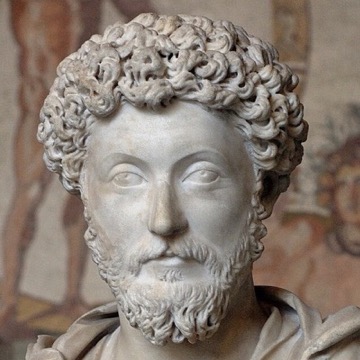
M. Aurelius Antoninus
Imperator philosophus, qui in castris ad Danuvium Graece sibi ipsi scripsit. Haec Latine conversa sunt.The philosopher-emperor, who wrote notes to himself in Greek in the army camps on the Danube. What appears here is translated into Latin.
Haec vox restituta est ex his libris:This voice is reconstructed from:
Scribe ad Marcus Aurelius: tabellarius epistulam tuam per vias Romanas feret, et responsum post dies aliquot redibit.Write to Marcus Aurelius: the courier carries your letter along the Roman roads, and a reply comes back after a few days.
LEGE ETIAMREAD NEXT
- De pompa mortuorum, quae numquam finiturOf the procession of the dead, which never endsMarcus Aurelius
- De ferro ante limenOf iron before the thresholdMarcus Aurelius
- De stationeOf the postMarcus Aurelius
- De commeatu aërio ex castris Mildenhall in Germaniam et Hispaniam translatoOn the air supply train moved from the camp at Mildenhall to Germany and SpainCaesar
- Ieiunium non est temperantiaFasting Is Not TemperanceFrontinus