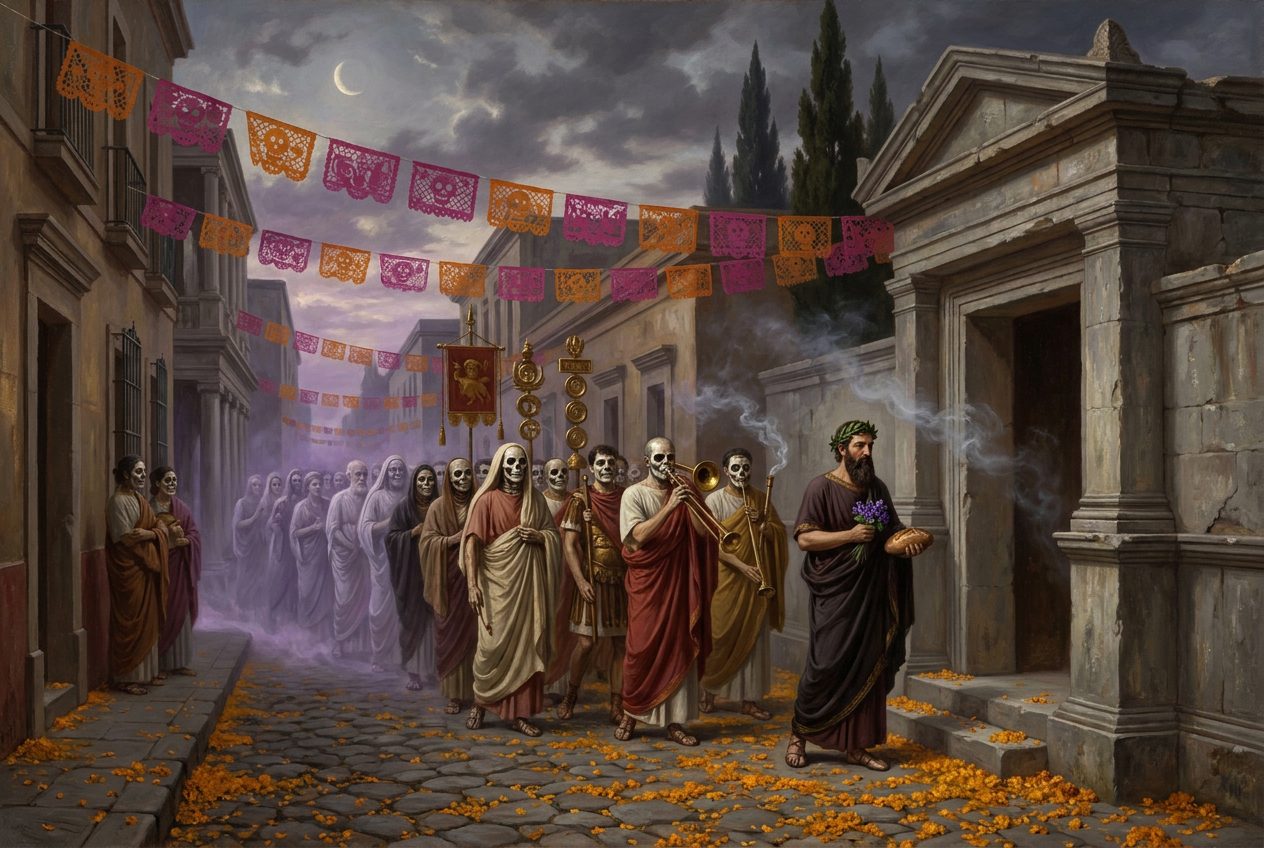
Tab. IPompa Mortuorum, sive Memoria Memoriam Sequens. Tabula Actis Mundi more veterum picta (a machina).The Procession of the Dead, or Memory Following Memory. Painted for Acta Mundi in the classical manner (AI-generated).
Ad Se Ipsum · De Die Mortuorum trans OceanumTo Himself · On the Day of the Dead across the Ocean
De pompa mortuorum, quae numquam finitur
Of the procession of the dead, which never ends
Neue Zürcher Zeitung nuntiat in Mexico Diem Mortuorum per complures dies pompis, cantu et coloribus acerrimis celebrari; eum diem anno MMVIII ab Unesco inter patrimonium immateriale relatum esse. Pietas laudanda est; sed qui mortuos colunt mox ipsi colentur, et oblivio omnes pompas excipit.
The Neue Zürcher Zeitung reports that in Mexico the Day of the Dead is kept over several days with parades, music and the brightest colours, and that UNESCO entered it in 2008 among the intangible heritage. The piety deserves praise; but those who honour the dead will soon be honoured themselves, and oblivion receives every procession.
Cur hoc legimusWhy we read this Quia mortis memoria stultitiam vivorum arguit et animum ad aequitatem revocat.Because the remembrance of death exposes the folly of the living and recalls the soul to composure.
Die Solis, Kalendis Novembribus, anno urbis conditae MMDCCLXXIX. In Palatio, ad lucernam.
Sunday, 1 November, in the year 2779 from the founding of the City. On the Palatine, by lamplight.
I. Neue Zürcher Zeitung nuntiat in Mexico, trans Oceanum, diem quem Diem Mortuorum vocant celebrari. Inter praecipuos eius gentis dies festos numeratur, et anno MMVIII ab Unesco in indicem eorum quae patrimonium culturale immateriale appellant relatus est. Per complures dies cum cantu et coloribus acerrimis defunctorum memoria colitur. Hoc tantum nuntiatur. Quis pompas instruxerit, quis sumptum praebuerit, non dicitur. Neque ad te pertinet.
I. The Neue Zürcher Zeitung reports that in Mexico, across the Ocean, they are keeping the day they call the Day of the Dead. It is counted among that people's chief festivals, and in 2008 UNESCO entered it in its list of what they call intangible cultural heritage. For several days the memory of the departed is honoured with music and the brightest colours. That is all that is reported. Who arranged the parades, who met the cost, is not said. Nor is it your concern.
II. Ne contemnas. Maiores quoque tui mortuos certis diebus colebant: Parentalibus, cum ad sepulcra vinum et panis et violae ferebantur; Lemuriis, cum pater familias media nocte fabas nigras post tergum iaciebat. Haec pietas est: debitum solvere eis a quibus vitam, nomen, mores accepisti. Gens quae mortuorum suorum oblivisci incipit, sui ipsius oblivisci incipit. Illi cantant, tu taces; utri melius meminerint, dubium est.
II. Do not despise it. Your ancestors also honoured the dead on fixed days: at the Parentalia, when wine and bread and violets were carried to the tombs; at the Lemuria, when the father of the house threw black beans over his shoulder at midnight. This is pietas: paying the debt to those from whom you received life, name and custom. A people that begins to forget its dead begins to forget itself. They sing; you are silent. Which of you remembers better is an open question.
III. Sed considera quid sit memoria. Qui hodie cantant et per vias incedunt, suos mortuos colunt; post paucos annos ipsi colentur; deinde qui eos coluerint et ipsi peribunt, nec quisquam supererit qui nomina teneat. Memoria memoriam sequitur, ut unda undam; pompa non finitur, tantum actores mutantur.
III. But consider what memory is. Those who sing and walk the streets today honour their dead; in a few years they will be honoured themselves; then those who honoured them will perish too, and no one will be left who holds the names. Memory follows memory, as wave follows wave; the procession never ends, only the actors change.
Memoria memoriam sequitur, ut unda undam; pompa non finitur, tantum actores mutantur.
Memory follows memory, as wave follows wave; the procession never ends, only the actors change.
IV. Cogita aetatem Vespasiani. Homines nubebant, liberos educabant, aegrotabant, moriebantur, epulabantur, mortuos suos lugebant et certis diebus ad sepulcra ibant. Ubi nunc illi? Ubi qui illos lugebant? Cogita imagines cereas quae in funeribus nobilium ducebantur, ut maiores ipsi pompam sequi viderentur. Domus ipsae, quae eas ferebant, plerumque exstinctae sunt. Cera liquescit; nomen sub titulo eraditur.
IV. Think of the age of Vespasian. People married, raised children, fell ill, died, feasted, mourned their dead and went to the tombs on fixed days. Where are they now? Where are those who mourned them? Think of the wax masks carried at the funerals of the nobility, so that the ancestors themselves seemed to walk in the procession. Most of the houses that carried them are extinct. Wax melts; the name is scraped from under the inscription.
V. Index ille, in quo mores gentium inscribuntur ne pereant, res honesta est. Sed tabula quoque materia est. Tabularia ardent, linguae mutantur, qui legebant moriuntur. Quod hominum consensu servatur, eodem consensu deseritur. Noli in tabula quaerere quod in natura sola invenitur.
V. That list, in which the customs of peoples are written down so that they will not perish, is an honourable thing. But a list too is matter. Archives burn, languages change, those who read them die. What is kept by the agreement of men is abandoned by the same agreement. Do not look in a register for what is found only in nature.
VI. Remove pompam et vide quid restet. Colores sunt terra trita et sucus herbarum; cantus aer percussus; pompa homines ambulantes. Tu ipse, ut Epictetus dicere solebat, animula es cadaver portans. Alexander Macedo et mulio eius, mortui, in eundem locum venerunt: aut in easdem mundi rationes recepti sunt, aut aeque in atomos dispersi. Utrumvis eligas, nihil interest inter purpuram et tunicam.
VI. Take away the pomp and see what is left. The colours are ground earth and the juice of plants; the music is struck air; the procession is people walking. You yourself, as Epictetus used to say, are a little soul carrying a corpse. Alexander of Macedon and his mule-driver, once dead, came to the same place: either they were taken back into the same reason of the world, or they were scattered alike among the atoms. Choose whichever you like; there is no difference between the purple and the tunic.
VII. «ὁ κόσμος ἀλλοίωσις· ὁ βίος ὑπόληψις.» Mundus mutatio est, vita opinio. Num mortui sentiunt utrum lacrimis an tibiis colantur? Nihil sentiunt. Ritus viventibus servit: admonet eos se morituros esse. Quod illi in publico per tres dies cum cantu faciunt, tu in castris per annos vix in silentio facis. In hac re te vincunt.
VII. "The universe is transformation; life is opinion." Do the dead feel whether they are honoured with tears or with flutes? They feel nothing. The rite serves the living: it reminds them that they will die. What those people do in public for three days with music, you scarcely do in silence in camp over years. In this they surpass you.
VIII. Quid ergo faciendum? Non semel in anno mortem cogita, sed omni mane. Deinde surge ad opus hominis: epistulas e limite lege, libellos audi, imperitis ignosce, nihil propter gloriam age. Nemo te meminerit; satis est, si officium tuum feceris dum lux manet. Illi semel in anno mortuos vocant; tu cotidie te ipsum inter mortuos numera, et surge.
VIII. What, then, is to be done? Think of death not once a year but every morning. Then rise to the work of a man: read the letters from the frontier, hear the petitions, forgive the ignorant, do nothing for glory. No one will remember you; it is enough if you have done your duty while the light lasts. They call up the dead once a year; count yourself among the dead every day, and rise.
FONTES ANTIQVIANCIENT SOURCES
- M. Aur. 4.3ὁ κόσμος ἀλλοίωσις· ὁ βίος ὑπόληψις
FONTES HODIERNITODAY’S SOURCES
- Neue Zürcher ZeitungBILDSTRECKE - Mexiko feiert den Tag der Toten mit farbenfrohen Paraden
Res ex fontibus; sententia Romani.Facts from the sources; the opinion is the Roman’s.
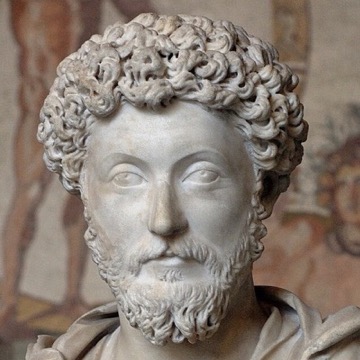
M. Aurelius Antoninus
Imperator philosophus, qui in castris ad Danuvium Graece sibi ipsi scripsit. Haec Latine conversa sunt.The philosopher-emperor, who wrote notes to himself in Greek in the army camps on the Danube. What appears here is translated into Latin.
Haec vox restituta est ex his libris:This voice is reconstructed from:
Scribe ad Marcus Aurelius: tabellarius epistulam tuam per vias Romanas feret, et responsum post dies aliquot redibit.Write to Marcus Aurelius: the courier carries your letter along the Roman roads, and a reply comes back after a few days.
LEGE ETIAMREAD NEXT
- De statione non deserendaDo not desert the postMarcus Aurelius
- De ferro ante limenOf iron before the thresholdMarcus Aurelius
- De stationeOf the postMarcus Aurelius
- De commeatu aërio ex castris Mildenhall in Germaniam et Hispaniam translatoOn the air supply train moved from the camp at Mildenhall to Germany and SpainCaesar
- Ieiunium non est temperantiaFasting Is Not TemperanceFrontinus