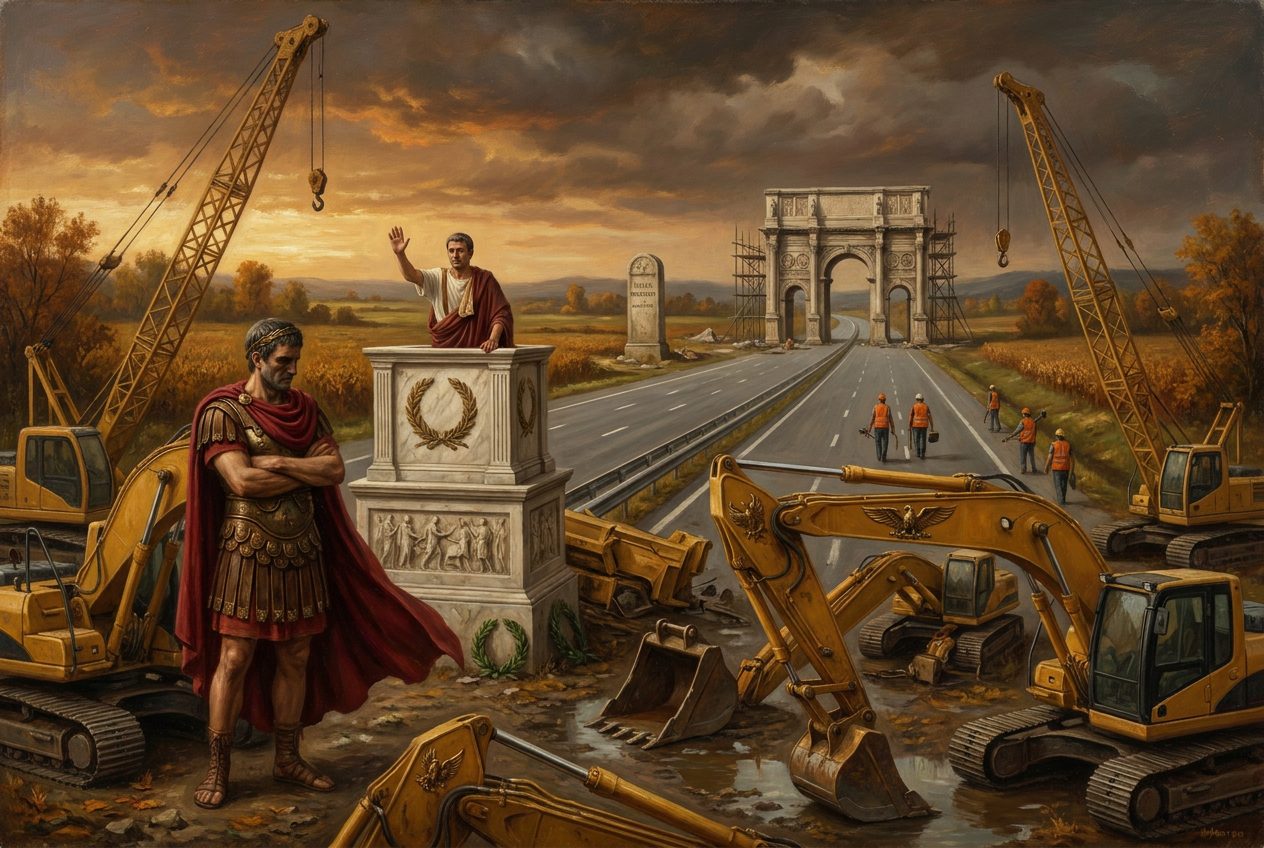
Tab. IVia Interrupta, sive Consilium Post Castra Posita. Tabula Actis Mundi more veterum picta (a machina).The Interrupted Road, or Council Held After the Camp Was Pitched. Painted for Acta Mundi in the classical manner (AI-generated).
Orbis Terrarum · De via A69 in GalliaThe World Map · On the A69 road in Gaul
Prius iudicandum, deinde fodiendum
First Judge, Then Dig
Via A69 in Gallia die Veneris vehiculis aperta est, ut narrant Valeurs actuelles, post moram novem et dimidium mensium quam iudicium medio opere latum attulit. Moram maxime fecit ordo praeposterus, quo de necessitate operis post primum lapidem quaesitum est. Haec autem causa sanabilis est.
The A69 road in Gaul opened to traffic on Friday, Valeurs actuelles reports, nine and a half months late, a delay brought on by a court ruling handed down halfway through the work. The chief cause was an order of business turned upside down: the need for the work was examined after the first stone was laid. That cause can be cured.
Cur hoc legimusWhy we read this Quia viae sternendae virtus omnibus factionum moris et litibus praevaluit.Because the virtue of laying roads prevailed over all the delays and lawsuits of factions.

Die Saturni, ante diem VII Idus Novembres, anno urbis conditae MMDCCLXXIX. Ut narrant Valeurs actuelles, via publica quae A69 appellatur die Veneris, ante diem VIII Idus Novembres, vehiculis aperta est. Martial Gerlinger, qui societati viae praeest, refert opus die XV mensis Octobris absolutum esse, deinde ultimas probationes factas. De hac via triginta fere annos disceptatum est, inter recursus, mandata magistratuum, concursus hominum nonnumquam violentos.
Saturday, the seventh day before the Ides of November, in the year 2779 from the founding of the City. Valeurs actuelles reports that the public road called the A69 opened to traffic on Friday, 6 November. Martial Gerlinger, who heads the road's company, says the work was finished on 15 October and the final inspections made after that. This road has been argued over for some thirty years, through appeals, official injunctions and gatherings of men, some of them violent.
Opus his gradibus processit. Die XXVII mensis Februarii anni superioris tribunal administrativum opus intermitti iussit, quod quaerebatur an causa necessaria et maior utilitatis publicae, quam RIIPM vocant, satis probata esset. Itaque, ut Gerlinger dicit, mille fere operarii domum dimissi sunt, machinae CCCL per totam Galliam dispersae. Intermissio menses tres et dimidium tenuit. Mensibus Maio et Iunio curia appellationis opus resumi permisit. Sed in machinis revocandis et operis iterum cogendis alii tres aut quattuor menses consumpti sunt, et quod aestate faciendum erat, hieme factum est. Summa morae: menses novem et dimidium; via enim exeunte anno MMXXV aperienda erat.
The work went by these stages. On 27 February of last year the administrative court ordered it halted, because it was disputed whether an imperative reason of overriding public interest, which they call the RIIPM, had been sufficiently proved. So, as Gerlinger tells it, about a thousand workers were sent home and 350 machines scattered across all of Gaul. The halt lasted three and a half months. In May and June the court of appeal allowed work to resume. But recalling the machines and gathering the crews again took another three or four months, and what should have been done in summer was done in winter. Total delay: nine and a half months. The road was due to open at the end of 2025.
Hoc ego primum inspicio. Vitium in ordine iudiciorum fuit. De utilitate publica, quam DUP vocant, iam decretum erat, auditis vicinis et recursibus iam motis. Deinde, machinis in agro positis, altera quaestio de ipsa necessitate operis mota est. Quid hoc aliud est quam castra metari et, legionibus iam in acie stantibus, consilium habere utrum bellum gerendum sit? Nunc civitas, ut Gerlinger refert, ordinem mutavit: necessitas operis una cum utilitate publica examinabitur, priusquam opus incipiatur. Recte, quamquam sero.
This is the first thing I inspect. The fault lay in the order of the rulings. Public utility, which they call the DUP, had already been decreed, after the neighbours were heard and appeals were already lodged. Then, with the machines standing in the field, a second question was raised: whether the work was needed at all. What is that but pitching camp and, with the legions already drawn up in line of battle, holding a council on whether to make war? Now, Gerlinger reports, the state has changed the order: the need for a work will be examined together with its public utility, before the work begins. Rightly, if late.
Quid hoc aliud est quam castra metari et, legionibus iam in acie stantibus, consilium habere utrum bellum gerendum sit?
What is that but pitching camp and, with the legions already drawn up in line of battle, holding a council on whether to make war?
Ego Portum Iulium una hieme perfeci; lacum Avernum cum Lucrino et mari iunxi, remiges viginti milia in tuto exercui. Si quis mihi medio opere remiges domum mittere et naves per Italiam dispergere iussisset, Sextus Pompeius mare etiam nunc teneret. Classis dimissa non eodem pretio redit: duplex sumptus, duplex tempus, tempestas anni amissa. Idem in Gallia accidit. Appius Claudius viam suam et aquam eadem censura perduxit, quia de re facienda ante opus decretum erat, non in medio.
I finished the Portus Iulius in a single winter. I joined Lake Avernus to the Lucrine lake and to the sea, and trained twenty thousand rowers in safe water. Had anyone ordered me halfway through to send the rowers home and scatter the ships across Italy, Sextus Pompey would hold the sea to this day. A fleet disbanded does not come back at the same price: double the cost, double the time, a season lost. The same happened in Gaul. Appius Claudius brought his road and his aqueduct through in one censorship, because the decision to build had been made before the work, not in the middle of it.
Praeterea Gerlinger affirmat societatem plus sescenta maleficia passam esse, a minis usque ad machinarum corruptionem, et prope trecentas querellas apud magistratus detulisse. Haec ab ipso redemptore dicuntur. Quis ea fecerit, quot damnationes secutae sint, acta non dicunt. Ne adversariorum quidem rationes referunt: quid de agris, de aquis, de pecunia obiecerint, tacetur. Magistratus prudens adversarios ante primum lapidem audit et iudicat, deinde opus defendit. Qui post sententiam latam machinas frangit, publicam fidem violat et lege de damno iniuria dato coercendus est; custodes operi a principio dandi erant.
Gerlinger further states that the company suffered more than six hundred malicious acts, from threats to the wrecking of machines, and lodged nearly three hundred complaints with the authorities. These are the contractor's own words. Who did these things, and how many convictions followed, the reports do not say. Nor do they give the opponents' reasons: what they objected about the fields, the waters or the money goes unmentioned. A prudent magistrate hears the opponents and rules before the first stone, then defends the work. Whoever breaks machines after judgment is given violates the public faith and should be restrained under the law on wrongful damage; the work should have had guards from the start.
Concordia tamen hic aliquid valuit: Gerlinger dicit civitatem et municipia semper ab opere stetisse. Sententiam, quam semper in ore habui, memini: «concordia parvae res crescunt, discordia maximae dilabuntur». Unum adhuc quaero. Via est societatis, non populi, et de vectigalibus a viatoribus exigendis excerpta actorum silent. Remedium in promptu est neque novum. Primum semel et cito de necessitate iudicandum est; deinde custodes operi dandi; tum unus praefectus cum pecunia et termino praeponendus; postremo via populo aperienda pretio quod populus noverit. Viam maxime tardavit neque pala neque latro, sed ordo iudiciorum praeposterus.
Still, concord counted for something here: Gerlinger says the state and the local authorities stood behind the work throughout. I recall the maxim always on my lips: "by concord small things grow; by discord the greatest fall apart." One question remains. The road belongs to the company, not the people, and the extracts of the report are silent on the tolls to be charged to travellers. The remedy is at hand, and it is not new. First, rule once and quickly on the need. Next, give the work guards. Then put one prefect in charge, with money and a deadline. Last, open the road to the people at a price the people know. What slowed this road most was neither the shovel nor the saboteur, but the backward order of the rulings.
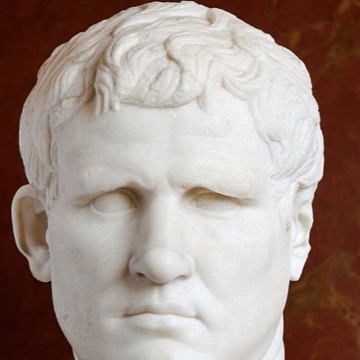
M · AGRIPPA · L · F · COS · TERTIVM · INSPEXIT
M · AGRIPPA · SON OF LUCIUS · THREE TIMES CONSUL · INSPECTED THIS
FONTES ANTIQVIANCIENT SOURCES
- Sall. Iug. 10.6 (Agrippa's maxim, Sen. Ep. 94.46)concordia parvae res crescunt, discordia maximae dilabuntur
FONTES HODIERNITODAY’S SOURCES
- Valeurs actuelles« Réglementation complexe », manifestations, recours, violences, tarifs : le patron de l’A69 raconte les obstacles rencontrés sur le chantier
Res ex fontibus; sententia Romani.Facts from the sources; the opinion is the Roman’s.
M. Vipsanius Agrippa
Victor apud Actium, aedificator Pantheonis et aquae Virginis, auctor orbis terrarum depicti. Aedilis cloacas navicula perlustravit. Verba non amat; opera amat.Victor at Actium, builder of the Pantheon and the Aqua Virgo, maker of the great map of the world. As aedile he inspected the sewers by rowing through them. He has no love for words; he loves works.
Haec vox restituta est ex his libris:This voice is reconstructed from:
Scribe ad Agrippa: tabellarius epistulam tuam per vias Romanas feret, et responsum post dies aliquot redibit.Write to Agrippa: the courier carries your letter along the Roman roads, and a reply comes back after a few days.
LEGE ETIAMREAD NEXT
- Nihil inexplicabile: machina cessavit, homo caecus iussitNothing Inexplicable: the Machine Failed, a Blind Man Gave the OrderAgrippa
- Ubi terra movetur, ibi finis imperiiWhere the earth moves, there dominion endsAgrippa
- Naves Eorum Volant, Pontes RuuntTheir Ships Fly. Their Bridges Fall.Agrippa
- De commeatu aërio ex castris Mildenhall in Germaniam et Hispaniam translatoOn the air supply train moved from the camp at Mildenhall to Germany and SpainCaesar
- Ieiunium non est temperantiaFasting Is Not TemperanceFrontinus