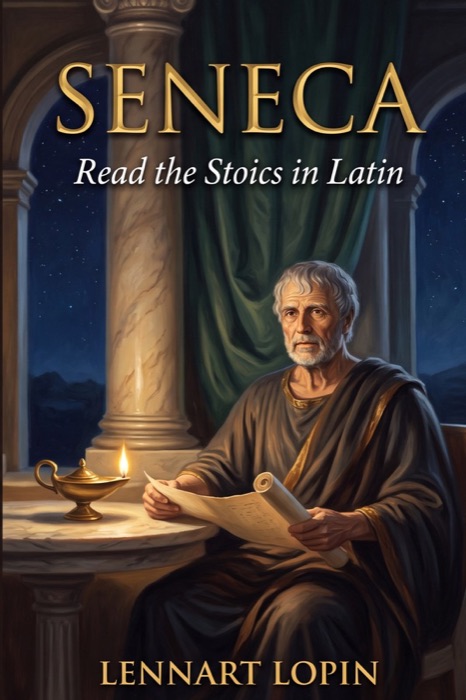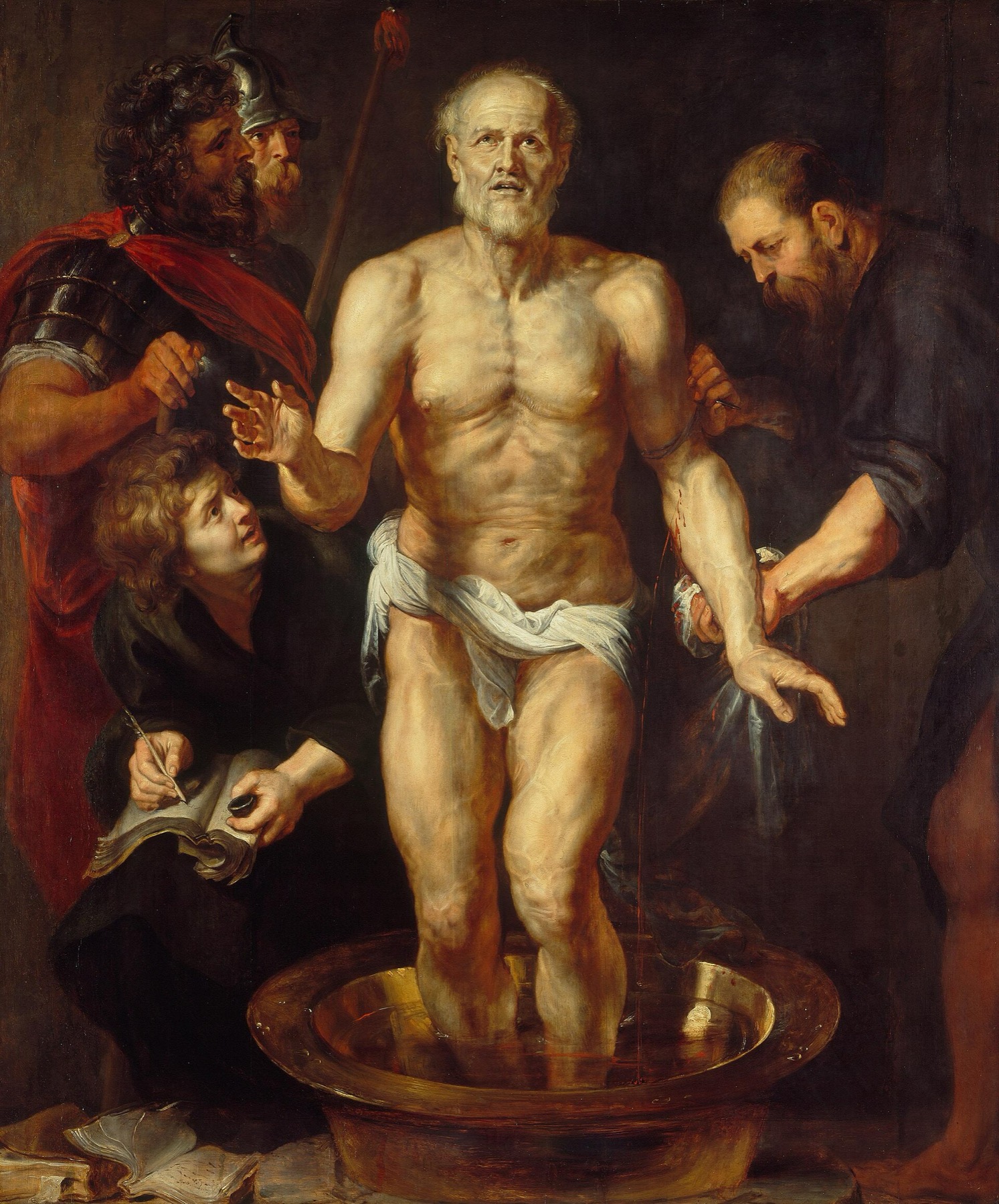
Tab. IPetrus Paulus Rubens, Seneca moriens (c. MDCXV). Philosophus etiam moriens dictabat.Peter Paul Rubens, The Dying Seneca (c. 1615). Even as he died, the philosopher kept dictating.
Philosophia · Epistulae MoralesPhilosophy · Moral Letters
De Servis Qui Loquuntur
On Servants That Speak
Novae machinae respondent, scribunt, consulunt. Seneca Lucilium monet ne sapientiam emi posse putet.
The new machines answer, write, and advise. Seneca warns Lucilius not to imagine that wisdom can be bought.

Seneca Lucilio suo salutem.
Seneca greets his Lucilius.
Scribis mihi, Lucili, iam omnes apud vos machinulas habere quae loquantur: interrogatae respondent, iussae scribunt, consultae suadent; nec quicquam esse tam obscurum quod non statim explicent. Gaudes, ut video, et me quoque gaudere vis. Gaudebo, cum didicero quid tibi ex hac re accedat. Interim hoc unum quaero: cum illa loquitur, quis tacet?
You write to me, Lucilius, that everyone among you now owns little machines that speak: ask them and they answer, order them and they write, consult them and they advise; and that nothing is so obscure that they cannot explain it at once. You are delighted, I see, and you want me to be delighted too. I shall be, once I have learned what you gain by it. In the meantime I ask one thing only: when it speaks, who falls silent?
Meministi Calvisium Sabinum, de quo olim tibi scripsi: hominem divitem, cui et patrimonium libertini erat et ingenium, memoria autem tam mala ut illi nomen modo Ulixis excideret, modo Achillis. Hic, ut eruditus videretur, servos magno emit, unum qui Homerum teneret, alterum qui Hesiodum; novem praeterea lyricis singulos assignavit. Deinde inter cenam versus ab illis subici iubebat, et saepe in medio verbo excidebat. Ridebamus. Nunc, mi Lucili, omnes Calvisii sumus.
You remember Calvisius Sabinus, of whom I once wrote to you: a rich man, with a freedman’s fortune and a freedman’s mind, and a memory so poor that the name of Ulysses would slip away from him, and then that of Achilles. Wishing to seem learned, he bought slaves at great expense — one to know Homer by heart, another Hesiod — and assigned one apiece to the nine lyric poets. Then at dinner he had them prompt him with verses, and he would often break off in the middle of a word. We laughed. Now, my Lucilius, every one of us is Calvisius.
Bona mens nec commodatur nec emitur.
A sound mind can be neither borrowed nor bought.
Cum Sabinus gloriaretur singulos servos sibi centenis milibus sestertium constare, Satellius Quadratus, homo dicax, “Minoris,” inquit, “totidem scrinia emisses.” Scrinia nunc loquuntur, Lucili: hoc solum novi est; cetera vetera. Nam bona mens nec commodatur nec emitur. Quod machina tua scit, non tu scis; quod servus tuus meminit, non tu meministi. Possessio est ista, non scientia — et quidem aliena, quam fortuna, cum primum voluerit, auferet et te nudum relinquet.
When Sabinus boasted that each slave had cost him a hundred thousand sesterces, Satellius Quadratus, a man with a sharp tongue, remarked: “For less, you could have bought as many bookcases.” Now the bookcases talk, Lucilius: that is the only new thing; all the rest is old. For a sound mind can be neither borrowed nor bought. What your machine knows, you do not know; what your slave remembers, you do not remember. That is a possession, not knowledge — and someone else’s possession at that, which Fortune will take away whenever she pleases, and leave you naked.
Varro noster instrumentum agrorum in tria genera divisit: mutum, ut plaustra; semivocale, ut boves; vocale, ut servos. Vos quartum quoddam genus invenistis: instrumentum quod loquitur neque tamen homo est, quodque tam blande servit ut dominetur. Vide quam facile id fiat. Primo rogas quid scribendum sit; deinde quid sentiendum; postremo ne rogas quidem. “Nulla servitus turpior est quam voluntaria”: hoc tibi olim scripsi, cum de servis nostris quaereremus — et de nobis ipsis. Numquam putavi id tam cito verum fore.
Our Varro divided the equipment of a farm into three kinds: the mute, like carts; the half-voiced, like oxen; and the voiced, like slaves. You have discovered a fourth kind: a tool that speaks yet is not a man, and that serves so sweetly that it rules. See how easily it happens. First you ask it what to write; then what to think; at last you no longer even ask. “No slavery is more shameful than the voluntary kind”: I wrote that to you once, when we were considering our slaves — and ourselves. I never imagined it would come true so soon.
Non te iubeo machinam abicere. Sapiens divitiis utitur, non servit; ita et hac utere, sed ut instrumento, non ut magistro. Rogato eam de itineribus, de numeris, de rebus quae sciri possunt et oblivisci; de vita autem, de morte, de virtute noli rogare. Haec enim nemo pro te discere potest, non magis quam pro te mori.
I do not bid you throw the machine away. The wise man uses riches; he is not their slave. Use this too — but as a tool, not as a teacher. Ask it about roads, about numbers, about things that can be known and then forgotten; but about life, about death, about virtue, ask it nothing. These no one can learn on your behalf, any more than anyone can die on your behalf.
Sed ut huius quoque epistulae aliquod munus sit: hodie apud Epicurum hoc inveni — non per machinam, sed legendo. “Si cui sua non videntur amplissima, licet totius mundi dominus sit, tamen miser est.” Adiciam ipse: qui omnia per alium scit, nihil suum habet. Vale.
But so that this letter, too, may bring you some gift: today I found this in Epicurus — not through a machine, but by reading. “Whoever does not regard what he has as ample wealth is wretched, though he be master of the whole world.” I add one of my own: he who knows everything through another owns nothing of his own. Farewell.
FONTES ANTIQVIANCIENT SOURCES
- Sen. Ep. 27.5–8Calvisius Sabinus and his slaves who knew Homer by heart; “minoris totidem scrinia emisses.”
- Varro, Res Rusticae I.17.1The three kinds of farm equipment: vocale, semivocale, mutum.
- Sen. Ep. 47.17“Nulla servitus turpior est quam voluntaria.”
- Sen. Ep. 9.20Epicurus on the wretchedness of the master of the world.
FONTES HODIERNITODAY’S SOURCES
- —Haec sententia ex ipsius ingenio, non ex nuntio singulari.This piece reflects on the times rather than a single report.
Res ex fontibus; sententia Romani.Facts from the sources; the opinion is the Roman’s.
L. Annaeus Seneca
Philosophus Stoicus e Corduba, Neronis magister et postea victima; vir ditissimus qui de paupertate pulcherrime scripsit, nec hanc contradictionem ignoravit. Epistulas ad Lucilium amicum iterum mittit, a CXXV numerandas.Stoic philosopher from Córdoba, tutor to Nero and later his victim; an enormously rich man who wrote more beautifully about poverty than anyone, and knew it. He writes to his friend Lucilius again — the letters now numbered from CXXV onward.
Haec vox restituta est ex his libris:This voice is reconstructed from:
ALII ROMANI DE HAC REOTHER ROMANS ON THIS
Britanni olim balnea et porticus et convivia “humanitatem” vocabant, cum pars servitutis esset. Vos machinam quae vobis adulatur “progressum” vocatis.The Britons once called baths, porticoes and banquets “civilization”, when they were part of their enslavement. You call a machine that flatters you “progress”.
Non edit, non dormit, vestimenta non poscit. Eme. Cum senuerit, vende, ut bovem vetulum et servum morbosum.It does not eat, does not sleep, asks for no clothes. Buy it. When it grows old, sell it — like the worn-out ox and the sickly slave.
LEGE ETIAMREAD NEXT
- De aëroportu Riadi percusso et montanis IemenensibusOn the Strike Against Riyadh Airport and the Yemeni MountaineersCaesar
- Indutiae verbis decretae, igne peractaeA Ceasefire Decreed in Words, Enacted in FireTacitus
- In ambitum et aerarii direptionemAgainst Electoral Bribery and the Pillage of the TreasuryCicero