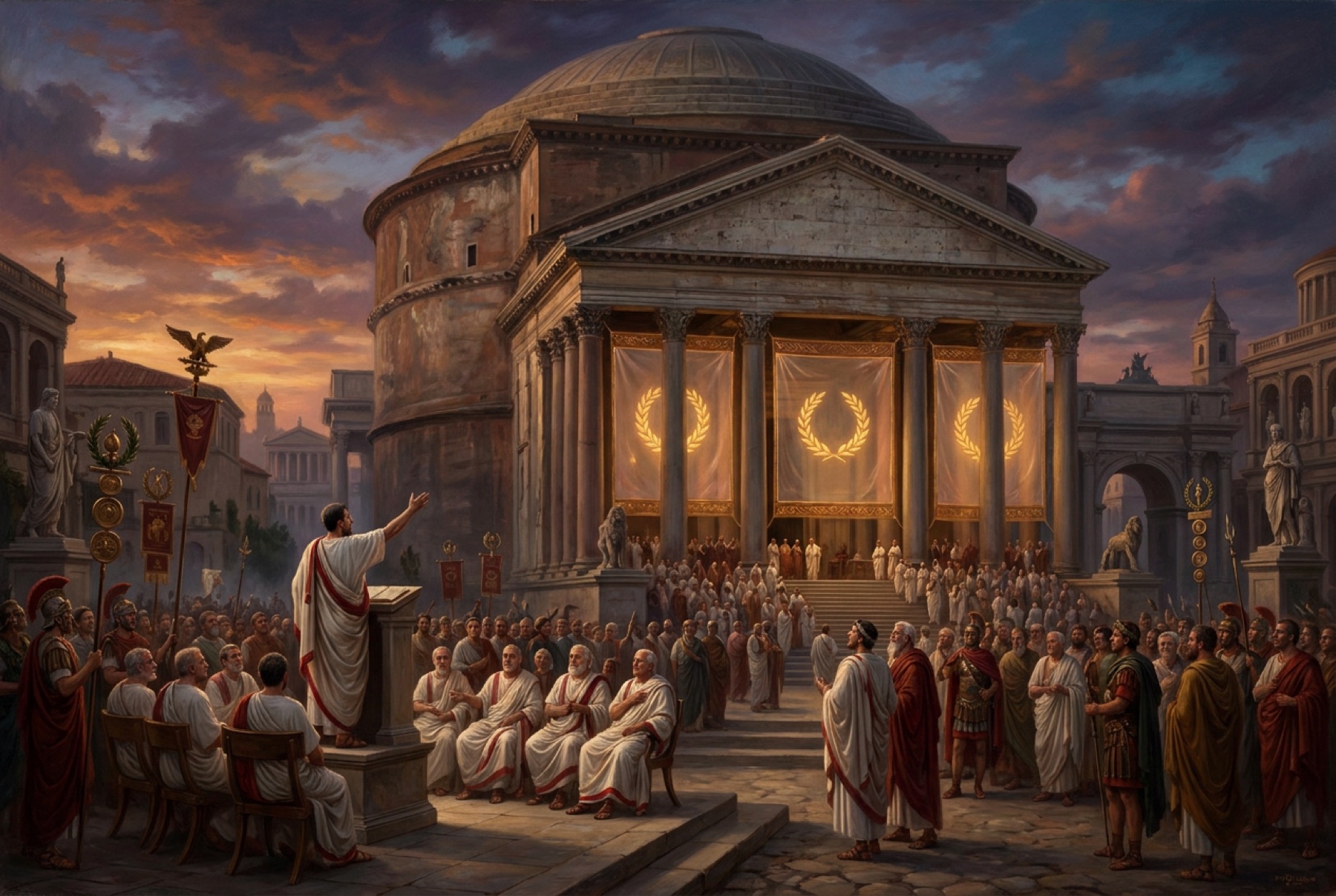
Tab. IOrator contra ambitum. Tabula Actis Mundi more veterum picta (a machina).The Orator Against Bribery. Painted for Acta Mundi in the classical manner (AI-generated).
Pro Re Publica · De aerario expilatoFor the Republic · On the Plundered Treasury
In ambitum et aerarii direptionem
Against Electoral Bribery and the Pillage of the Treasury
Iudice foederali interdicente ne praeconia Donaldo Trump faventia pecunia publica spargantur, aperitur quantus furor sit tributa civium in factionis largitionem convertere.
With a federal judge halting taxpayer-funded advertisements favoring Donald Trump, the unbridled madness of turning public revenues into factional largesse stands exposed.
Cur hoc legimusWhy we read this Quia aerarium publicum privatae potentiae et ambitui deservire fas non est.Because it is unlawful for the public treasury to serve the private power and bribery of one man.

Quo usque tandem abutetur dominandi cupiditas patientia legum? Quousque audacia eorum progredietur, qui rem publicam non tam custodire quam expilare sibi permissum existimant? Quid est enim, iudices, quod his diebus trans Oceanum gestum esse comperimus, referente nuntio illo UPI, nisi nefaria aerarii direptio et apertissimus ambitus, qualem maiores nostri severissimis legibus damnassent?
How long, I ask you, will the lust for dominion abuse the forbearance of our laws? How far will the audacity of those men advance who imagine they are permitted not to safeguard the commonwealth, but to sack it? For what took place across the Ocean in recent days, as UPI reports, if not a criminal plundering of the treasury and the most barefaced electoral corruption—crimes that our ancestors would have visited with the sternest penalties?
Etenim Jennifer Rochon, iudex districtus meridionalis Novi Eboraci, edicto suo intercedere coacta est, ne pecunia a civibus tributa ad praeconia televisifica spargenda adhiberetur, quibus Donaldus Trump laudaretur et comitia media instigarentur. Vicies centena milia sestertium—immo vero viginti milia milium nummorum illorum transmarinorum—quae comitia populi ad fines custodiendos et ad publicam salutem tuendam adsignaverant, a procuratoribus Domus Albae in hunc privatae laudis apparatum nefario consilio translata esse arguuntur. Egone taceam, cum videam custodiam finium nudari ut consulis unius imago in tabulis publicis emineat?
Indeed, Jennifer Rochon, a judge of the Southern District of New York, was compelled to intervene by court order to prevent money extracted from the taxpayers from being squandered on television broadcasts celebrating Donald Trump and stoking the midterm elections. Twenty million of those overseas dollars—funds earmarked by the people's assembly for guarding the borders and defending public security—are alleged to have been diverted by White House officials into this apparatus of personal glorification with scandalous intent. Shall I remain silent while I watch the defense of the frontiers stripped bare so that the likeness of a single magistrate may loom large on the public boards?
Quid est aliud aliis sua eripere, aliis dare aliena? Hoc enim semper feneratores, hoc perditi cives, hoc Catilinae satellites moliti sunt: ut pecunia publica in propriam largitionem converteretur. Atqui asseverant defensores eius non ambitum esse, sed publicam quandam cohortationem qua cives moneantur ut patriam diligant! O di immortales! ubinam gentium sumus? Quis umquam tam insulsam excusationem audivit? Patriam videlicet diligere nemo potest nisi praesidis faciem contemplatus, et id quidem pecunia de fisco rapta! Addunt etiam ipsum hoc tempore candidatum non esse. Quasi vero non omnium intersit comitiorum aequitas, aut quasi non clamare suffragatoribus soleat, ut ipsum in aliorum personis eligant.
What else is this but to take away what belongs to some and give it to others? This was ever the aim of the usurers, of ruined citizens, of Catiline's accomplices: to convert the public treasury into private bribery. Yet his defenders assert that this is no campaign spending, but a public admonition urging citizens to love their fatherland! Immortal gods! Where in the world are we? Who ever heard so absurd an excuse? Can no one love his country, forsooth, without gazing upon the face of the president—and that financed by plunder from the public purse? They add that he is not even a candidate on the ballot at this time. As if the fairness of the assembly did not touch all citizens, or as if he had not repeatedly urged voters to pretend he was running in the person of others!
Quid est aliud aliis sua eripere, aliis dare aliena?
What else is this but to take away what belongs to some and give it to others?
Numquam, cum consul rem publicam gessi, aerarium sanctius haberi passus sum quam cum leges ipsas defenderem. Meministis enim qua severitate quaestores ad rationes adduxerim, quanto studio improbos a publico sequestraverim. Aerarium est nervus civitatis; quod si semel patuerit unius magistratus arbitrio, ut ex eo largitiones in populum pro sua factione effundat, actum est de suffragiis liberis, actum de libertate ipsa. Iure igitur et optimo consilio societas illa custodum et operariorum collegium ad praetorem confugerunt, damnum irreparabile et maiestatis laesionem contestantes.
Never, when I guided the state as consul, did I allow the treasury to be held more sacred than when defending the laws themselves. You remember the severity with which I summoned the quaestors to balance their books, and the zeal with which I kept corrupt men away from the commonwealth's accounts. The treasury is the sinew of the state; if it is once thrown open to the whim of a single magistrate to pour forth largesse for his faction, free suffrage is done for, and liberty itself is finished. Rightly and with sound judgment, therefore, did that watchdog coalition and the labor union flee to the magistrate, demonstrating irreparable harm and a betrayal of the public trust.
Quid enim distat inter eum qui pecuniam in campo Martio per sodalicia dividit, et eum qui machinatione imperii utens aerarium populi in sua praeconia transfundit? Ille quidem parva manu delinquit; hic vero totius rei publicae censu suffragia corrumpit. Haec est ambitus novissima species, eo gravior et pestilentior, quo maiore potestate armata est. At leges vigent; nam, ut iudex illa recte iudicavit, aequitatis libra et salus publica flagitabant ut haec nefaria profusio statim interdiceretur.
For what difference is there between a man who distributes bribes in the Campus Martius through unlawful electoral clubs, and one who uses the machinery of supreme command to funnel the people's treasury into his own advertisements? The former offends with petty sums; the latter corrupts the franchise with the entire wealth of the republic. This is the newest species of electoral bribery, all the more grievous and pestilential because it is armed with the highest power. But the laws still stand; for as that judge rightly decreed, the scales of equity and the public interest demanded that this shameful squandering be halted at once.
Quam ob rem, si qua fides, si qua constantia in iudiciis manet, cavendum est ne haec licentia diutius grassetur. Custodiantur fines imperii iis opibus quas leges destinaverunt; non enim ad unius viri gloriam sed ad communem utilitatem tributa penduntur. Cedant ergo privatae cupiditates sanctitati tabularum publicarum, et discant omnes, quantumvis potentes, aerarium populi non esse principis patrimonium.
Wherefore, if any good faith, if any constancy remains in the courts, we must ensure that such license spreads no further. Let the borders of the nation be guarded with the very funds the law provided; for taxes are not paid for the personal glory of one man, but for the common good. Let private ambitions yield to the sanctity of public accounts, and let all men learn, however powerful they may be, that the people's treasury is not the private estate of a ruler.
FONTES ANTIQVIANCIENT SOURCES
- Cic. Off. 2.83Quid est aliud aliis sua eripere, aliis dare aliena?
- Cic. Cat. 1.9O di immortales! ubinam gentium sumus?
FONTES HODIERNITODAY’S SOURCES
Res ex fontibus; sententia Romani.Facts from the sources; the opinion is the Roman’s.
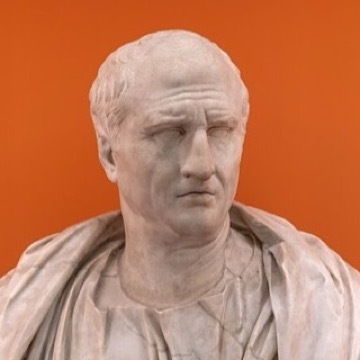
M. Tullius Cicero
Orator, consul, pater patriae — ut ipse non desinit commemorare. Catilinae coniurationem oppressit, rem publicam defendit dum potuit, et Antonii iussu occisus est. Nemo Romanus diligentius res novas ad leges maiorum exegit.Orator, consul, Father of his Country — as he never tires of reminding you. He crushed Catiline’s conspiracy, defended the Republic as long as it could be defended, and was murdered on Antony’s orders. No Roman measured new things against the ancestral constitution more relentlessly.
Haec vox restituta est ex his libris:This voice is reconstructed from:
LEGE ETIAMREAD NEXT
- Unum Consulem Habent, Collegam NullumThey Have One Consul — and No ColleagueCicero
- De aëroportu Riadi percusso et montanis IemenensibusOn the Strike Against Riyadh Airport and the Yemeni MountaineersCaesar
- Indutiae verbis decretae, igne peractaeA Ceasefire Decreed in Words, Enacted in FireTacitus
- De Servis Qui LoquunturOn Servants That SpeakSeneca