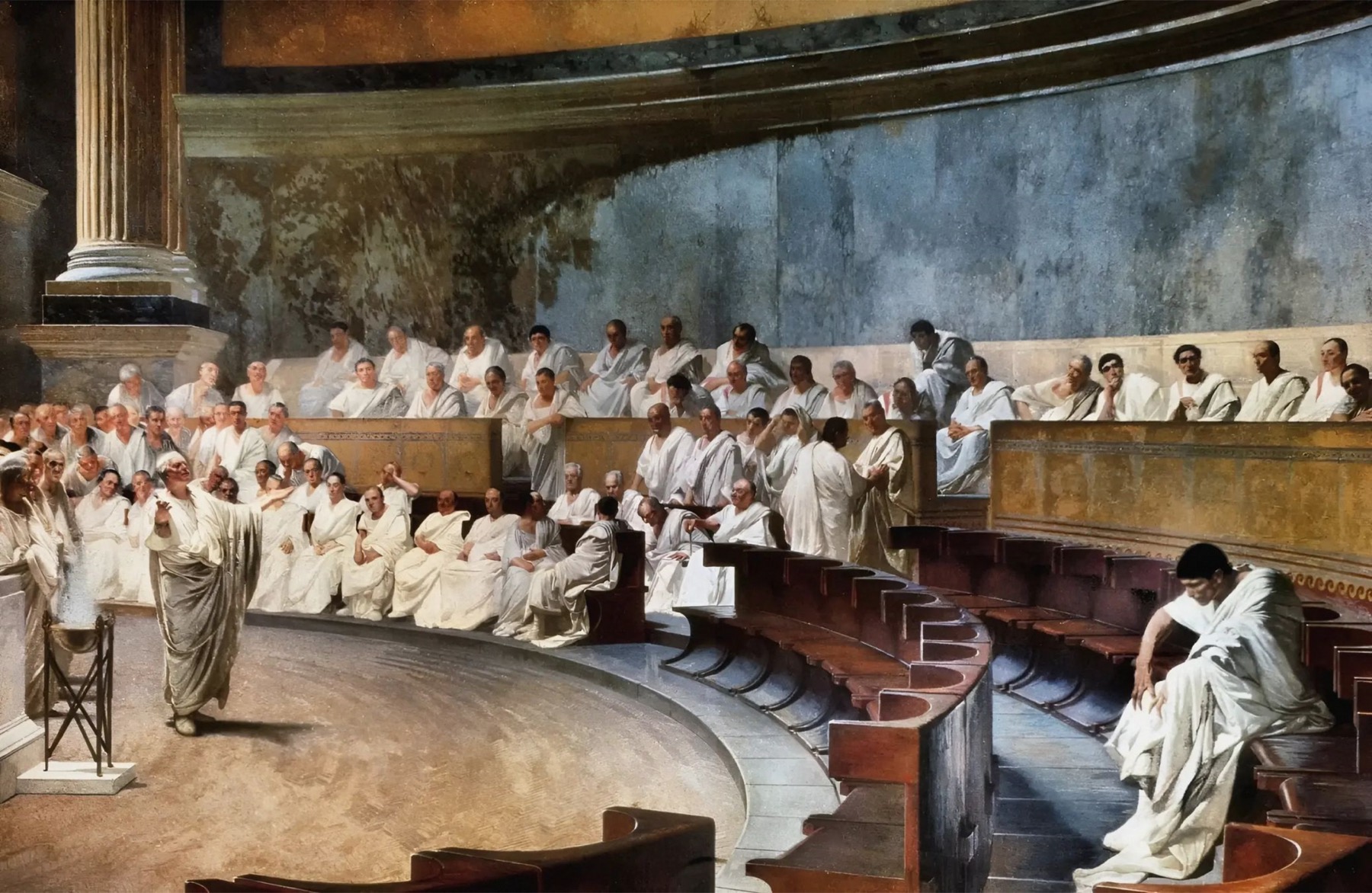
Tab. ICaesar Maccari, Cicero Catilinam in senatu accusat (MDCCCLXXXIX). Orator id factum numquam oblitus est; neque nos oblivisci sinit.Cesare Maccari, Cicero Denounces Catiline in the Senate (1889). The orator never forgot this moment — and has never let anyone else forget it.
Res Publica · Trans OceanumPolitics · America
Unum Consulem Habent, Collegam Nullum
They Have One Consul — and No Colleague
M. Tullius Cicero rem publicam Americanorum ad instituta maiorum nostrorum exigit — et regem invenit quadriennalem.
Marcus Tullius Cicero measures the American republic against the institutions of our ancestors — and finds a king with a four-year term.

Si quis ex maioribus nostris, patres conscripti, hodie Oceanum transmitteret et in eam urbem veniret quam Americani Washingtoniam appellant, quid primum aspiceret? Capitolium, senatum, aquilam, fasces: omnia nostra, omnia Romana. Neque id mirum. Nam qui illam rem publicam condiderunt, libros nostros legerant, exempla nostra sequebantur, Cincinnatum etiam suum habuerunt, qui bello confecto imperium deposuit et ad agrum rediit. Laudo, patres conscripti, et gratulor: nulla umquam gens nos diligentius imitata est.
If one of our ancestors, Conscript Fathers, were to cross the Ocean today and arrive in the city the Americans call Washington, what would he see first? A Capitol, a Senate, an eagle, the fasces: everything ours, everything Roman. Nor is that surprising. For the men who founded that republic had read our books and followed our examples; they even had their own Cincinnatus, who laid down his command when the war was won and went home to his farm. I praise them, Conscript Fathers, and I congratulate them: no nation has ever imitated us more diligently.
Sed — videte quam cito laus in querelam vertatur — unam rem, et eam maximam, non imitati sunt. Nos, cum reges expulissemus, imperium non uni sed duobus dedimus, neque in perpetuum sed in annum. Collegam collegae opposuimus, ut alter alterius cupiditatem intercessione cohiberet; annum finem posuimus, ut qui hodie imperaret, cras privatus rationem redderet. Americani autem unum consulem habent, collegam nullum; neque eum in annum creant, sed in quadriennium.
But — observe how quickly praise turns to complaint — one thing, and that the greatest, they did not imitate. When we drove out the kings, we gave supreme command not to one man but to two, and not for life but for a year. We set colleague against colleague, so that each might check the other’s ambition with his veto; we made the year its limit, so that the man who commanded today would tomorrow, as a private citizen, render his account. The Americans, however, have one consul and no colleague; nor do they elect him for a year, but for four.
Quid hic consul solus potest? Exercitibus imperat terra marique; legatos mittit et recipit; edicta proponit quae prope vim legum habent; et quibus vult, iis ignoscit, etiam damnatis. Nos ius provocationis populo dedimus, ne cuiquam civi indicta causa caput adimeretur; illi ius ignoscendi uni homini tradiderunt. Quid est hoc, patres conscripti, nisi regnum cui finis praescriptus est?
What can this solitary consul do? He commands armies on land and sea; he sends and receives ambassadors; he issues edicts that have almost the force of law; and whomever he wishes he pardons, even the condemned. We gave the people the right of appeal, so that no citizen should lose his life without a trial; they have handed the right of pardon to a single man. What is this, Conscript Fathers, if not a kingship with an expiry date?
Quid est hoc, nisi regnum cui finis praescriptus est?
What is this, if not a kingship with an expiry date?
At populus eum creat, dicet aliquis. Creat, fateor. Sed quo modo? Tanta largitione, tanta pecunia, tanta ambitione, ut, si quis apud nos tantum in comitia profudisset, lege Tullia, quam ego consul tuli, decem annos in exsilio viveret. Audio candidatos illic non per tribus et centurias suffragia petere, sed per tabellas lucentes quae in omnium manibus sunt, die noctuque, sine modo, sine pudore. Ego, cum consulatum peterem — homo novus, nullis maiorum imaginibus — ita petivi ut nemo me suffragia emisse dicere posset.
“But the people elect him,” someone will say. They do, I admit it. But how? With such lavish handouts, such sums of money, such canvassing, that if anyone among us had poured as much into an election, under the Tullian law — which I carried as consul — he would be living ten years in exile. I hear that candidates there do not seek votes tribe by tribe and century by century, but through the glowing tablets that are in everyone’s hands, day and night, without limit, without shame. When I stood for the consulship — a new man, with no ancestral masks in my hall — I sought it in such a way that no one could say I had bought a single vote.
Neque tamen desperandum est. Senatus illorum adhuc sedet; iudicia adhuc iudicant; populus adhuc suffragia fert; scriptores adhuc libere — interdum nimis libere — loquuntur. Res publica quae suam aegritudinem sentit, nondum mortua est. Nostra non uno die periit, sed multis diebus neglegentiae: cum boni tacerent, cum populus largitione corrumperetur, cum singuli homines plus possent quam leges.
And yet we must not despair. Their Senate still sits; their courts still judge; their people still vote; their writers still speak freely — at times too freely. A republic that can feel its own sickness is not yet dead. Ours did not perish in a single day, but through many days of neglect: while good men kept silent, while the people were corrupted by handouts, while individual men grew more powerful than the laws.
Itaque, patres conscripti, ego, qui consul rem publicam sine armis servavi, hoc consilium Americanis do, quod maiores nostri nobis dederunt: date consuli collegam; date imperio annum; neve cui uni liceat quod ceteris non licet. Columnas nostras satis imitati estis. Nunc imitamini annum.
And so, Conscript Fathers, I — who as consul saved the Republic without taking up arms — offer the Americans the counsel our ancestors gave us: give your consul a colleague; give his command a single year; and let no one man be allowed what all others are denied. You have copied our columns well enough. Now copy our year.
FONTES ANTIQVIANCIENT SOURCES
- Liv. II.1.7Liberty began with the annual consulship, not with any reduction of royal power.
- Cic. Rep. I.45The best constitution is a balanced mixture of monarchy, aristocracy and democracy.
- Lex Tullia de ambituCicero’s own law against electoral bribery, 63 B.C.
FONTES HODIERNITODAY’S SOURCES
Res ex fontibus; sententia Romani.Facts from the sources; the opinion is the Roman’s.
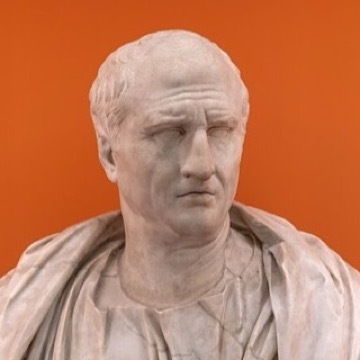
M. Tullius Cicero
Orator, consul, pater patriae — ut ipse non desinit commemorare. Catilinae coniurationem oppressit, rem publicam defendit dum potuit, et Antonii iussu occisus est. Nemo Romanus diligentius res novas ad leges maiorum exegit.Orator, consul, Father of his Country — as he never tires of reminding you. He crushed Catiline’s conspiracy, defended the Republic as long as it could be defended, and was murdered on Antony’s orders. No Roman measured new things against the ancestral constitution more relentlessly.
Haec vox restituta est ex his libris:This voice is reconstructed from:
ALII ROMANI DE HAC REOTHER ROMANS ON THIS
Domi res tranquillae, eadem magistratuum vocabula. Sic Augustus rem publicam servavit: delendo.At home all was calm; the magistrates kept their old titles. That is how Augustus preserved the Republic: by abolishing it.
Quod Iugurtha de Roma dixit, idem de comitiis vestris dici potest: omnia venalia.What Jugurtha said of Rome may be said of your elections: everything is for sale.
LEGE ETIAMREAD NEXT
- In ambitum et aerarii direptionemAgainst Electoral Bribery and the Pillage of the TreasuryCicero
- De aëroportu Riadi percusso et montanis IemenensibusOn the Strike Against Riyadh Airport and the Yemeni MountaineersCaesar
- Indutiae verbis decretae, igne peractaeA Ceasefire Decreed in Words, Enacted in FireTacitus
- De Servis Qui LoquunturOn Servants That SpeakSeneca